

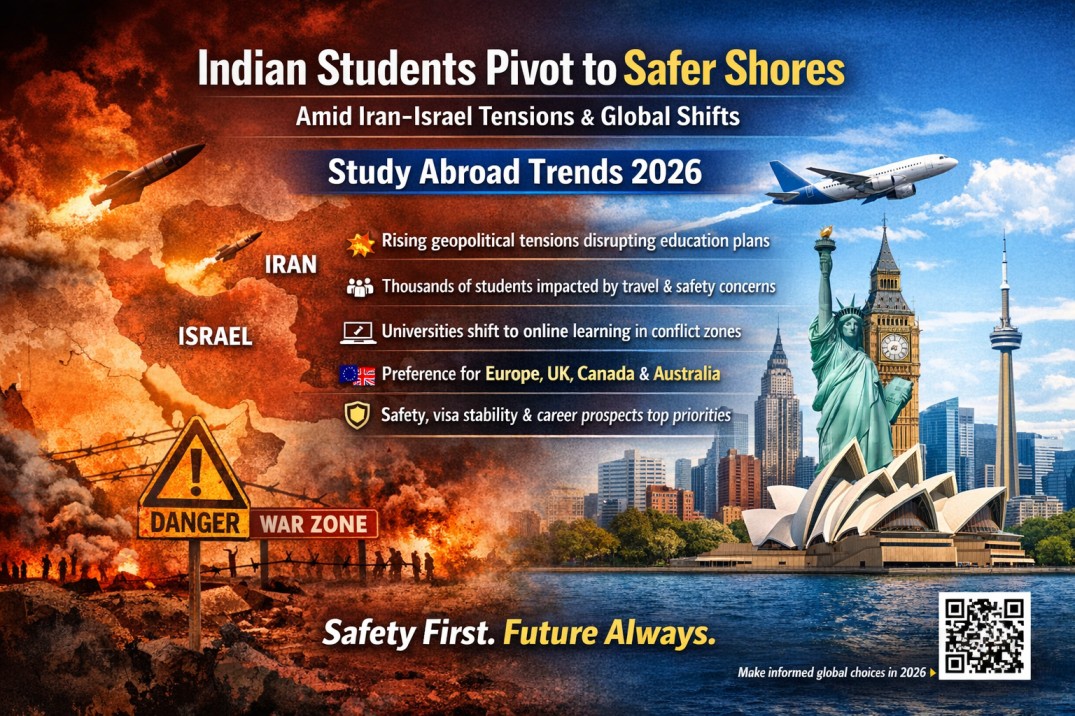
Author – Ritesh Ranjan: Indian students are rewriting their global education playbook in 2026, ditching volatile hotspots like Iran and the Gulf for affordable, stable alternatives. With CBSE exams cancelled due to the Iran-Israel-US conflict and medical dreams derailed for 1,000+ students, diversification is key. Traditional giants like the US and Canada face visa hurdles, while Asia and Europe surge ahead. Explore the top trends, safest bets, and smart strategies for your study abroad journey.
Iran-Israel War’s Direct Hit on Student Opportunities
The 2026 Iran-Israel-US conflict has obliterated education pipelines in the crossfire. CBSE and CISCE scrapped Class 10-12 exams across the Gulf (from Bahrain to the UAE), forcing reliance on internal assessments that cloud higher-ed admissions. In Iran, 1,000-1,500 Indian med students confront evacuation vs. exams like Olum-e-Paye, risking a full-year setback in cheap MBBS programs. Echoing 2022’s Ukraine crisis – where 20,000 fled war-torn campuses – families face financial ruin, mental stress, and career gaps.
UAE hubs like IIM Ahmedabad campuses pause ops amid strikes, slamming proximity perks. Parents now demand flexible Indian seats, but volatility underscores the need for resilient, non-conflict-zone choices.
Surging Asian Hubs: Japan, UAE, Malaysia Lead the Charge
Asia’s rising stars offer value without the risks. Japan aggressively courts Indians via MEXT scholarships for AI, robotics, and engineering at Tokyo University – tuition under ₹5 lakh/year with post-study work visas.
UAE (Dubai) shines with international campuses, but conflict volatility tempers hype; still, proximity beats long-haul flights. Malaysia and South Korea draw crowds for low costs (₹8-12 lakh/year) and quality STEM programs.
India flips the script: 7 universities crack the QS Asia Top 100, attracting Middle Eastern and ASEAN students through research ties. For Indians, it’s a home-based rethink.
Europe’s Affordable Powerhouses Gain Massive Traction
Ditching pricey West, students flock to Germany (tuition-free, Blue Card jobs in STEM), Ireland, and France. Baltic nations explode with a 1,300% surge in Indian enrollment (PW data) – think Estonia’s tech visas at half the UK cost.
January intakes boom for flexibility, dodging September rushes. Language skills (German, French) unlock edges in job markets.
Pro Tip: Target 2+2 programs – 2 years in India, 2 abroad – blending affordability and global stamps.Traditional Giants: US Tops, But Canada and Australia Wobble
USA reigns with 331,602 Indians (NAFSA 2024), fueling STEM dreams despite visa scrutiny. Australia ups caps by 9% (~25,000 seats) for nursing/IT, labeled “high-risk” but opportunity-rich.
Canada craters: 41% drop in applications due to strict visas. The UK echoes with costs and rules. Affordability rules – Eastern Europe (Austria, Czech) under ₹10 lakh/year, prioritizing AI/STEM employability.
Key Trends Shaping Indian Students’ Mobility
- Skill-First Choices: Job prospects trump prestige; AI, engineering dominate.
- Visa Savvy: Low-rejection spots like Germany win.
- Hybrid Models: Collaborative degrees cut costs 30-50%.Safety Shift: Post-Iran, conflict-free zones prioritize mental/financial peace.
Government pushes like “Study in India” and NMC flexibilities aid returnees.
Secure Your Future: Actionable Steps Now
Diversify wisely: Research MEXT/Japan or German DAAD early. Prep languages, ace IELTS for January slots. Track MEA advisories to sidestep conflicts. With 2026’s flux, blend home strengths with global gains for unbreakable careers.